Debt Management Plans Pros and Cons
If your wages seem to disappear the moment they arrive, and every text, call or letter from a creditor makes your stomach drop, you are not alone. Looking at debt management plans pros and cons can be a sensible first step when you need lower monthly payments but are not sure which solution fits your situation.
A debt management plan, often shortened to DMP, is an informal arrangement to repay unsecured debts at an amount you can afford each month. Typically, you make one monthly payment and that money is shared between your creditors. It can help if you are struggling with credit cards, personal loans, overdrafts, store cards or similar borrowing, but it is not suitable for every type of debt or every set of circumstances.
That is why the pros and cons matter. A DMP can create breathing space, but it can also take a long time to complete and may affect your credit file. For some people, another debt solution may be more appropriate. This article gives general information only, not regulated debt advice. If you want a recommendation based on your circumstances, you should speak to an FCA-authorised adviser.
What is a debt management plan?
A debt management plan is designed for people who cannot keep up with their contractual repayments on unsecured debts, but who can still afford to pay something each month. The payment is based on your income, household bills and essential living costs. The idea is simple: rather than trying and failing to meet full payments across several accounts, you offer a reduced affordable amount.
Because a DMP is informal, your creditors do not have to agree to freeze interest or charges, although many will consider doing so when they can see your budget and understand that you are making a fair offer. This flexibility can be helpful, but it also explains why a DMP is not as predictable as some formal debt solutions.
DMPs are usually used for unsecured debt. They do not generally deal with secured lending such as a mortgage, and priority debts like rent arrears, council tax, magistrates’ court fines and some utility arrears often need more urgent attention. If those debts are part of the picture, getting proper advice quickly is especially important.
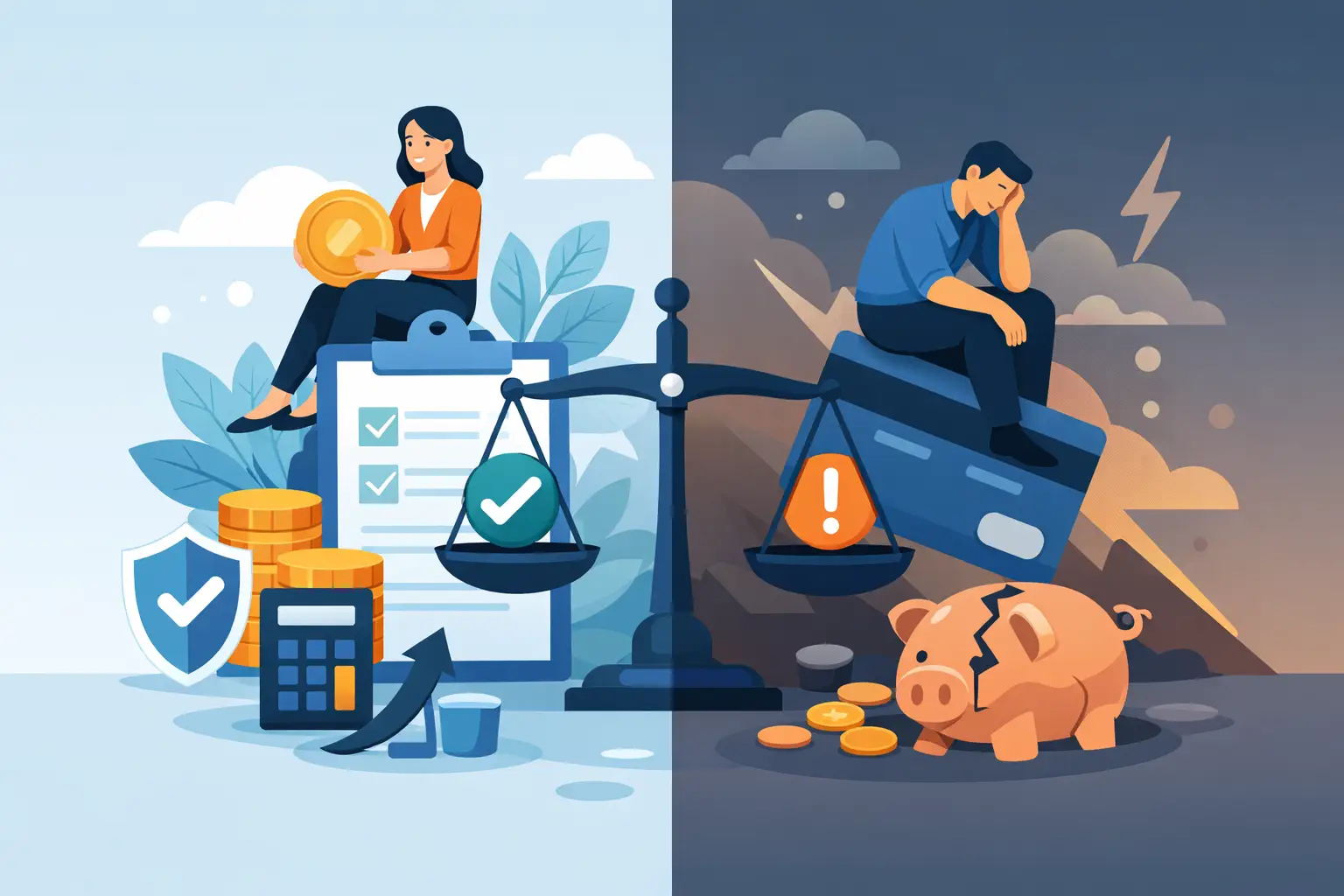
Debt management plans pros and cons at a glance
The biggest advantage of a DMP is affordability. If your current repayments are unrealistic, reducing them to one manageable monthly amount can take immediate pressure off your household budget. For many people, that alone means fewer panic moments, fewer missed essentials and fewer sleepless nights.
Another benefit is simplicity. Keeping track of multiple due dates can feel impossible when money is tight. A single payment can make things easier to manage and may help you regain a sense of control.
There is also a degree of flexibility. If your circumstances change, an informal arrangement can sometimes be adjusted more easily than a formal insolvency solution. That can help if your income goes up and down or if your household costs suddenly increase.
But the drawbacks are real. A debt management plan does not usually reduce the amount you owe unless creditors choose to freeze interest and charges. If they do not, your balance may fall very slowly. Even where interest is frozen, lower monthly payments often mean the plan lasts for many years.
Your credit file is also likely to be affected. Reduced payments and defaults can make it harder to borrow in future. For someone hoping to apply for a mortgage or other credit soon, that can be a serious downside.
There is also no legal protection built into a standard DMP. Creditors may continue collections activity, and some may not accept the proposed payment. That does not mean a DMP never works. It means expectations need to be realistic from the start.
The main pros of a debt management plan
For the right person, the strongest point is that a DMP can make debt feel manageable again. When your outgoings are higher than your income, continuing as you are may simply not be possible. A plan based on what you can actually afford can stop the cycle of borrowing more just to keep up.
It can also help you treat creditors fairly. Rather than paying whichever bill shouts the loudest, your payments are normally divided on a pro rata basis. That means each creditor receives a fair share according to what you owe.
A DMP may suit people whose income is steady enough to support monthly payments, but not high enough to clear debts at the original rate. It can also be helpful if your financial difficulties are serious but not permanent, for example after a temporary drop in income, separation or increased household costs.
Emotionally, the relief can be significant. Money problems often create shame and avoidance. Having a plan in place, even an informal one, can make it easier to answer the phone, open the post and start dealing with the problem rather than fearing it every day.
The main cons of a debt management plan
The length of time is often the biggest issue. If you owe a large amount and can only pay a modest sum each month, a DMP could run for a very long period. That can be discouraging, especially if your balances seem to move down slowly.
A second concern is that creditor co-operation is not guaranteed. Some may freeze interest, others may not. Some may accept reduced payments quietly, while others may continue to contact you for more money or issue default notices. Because the arrangement is informal, there is less certainty than with some formal debt solutions.
A DMP also does not write off debt as a matter of course. If your debts are so high that repaying them in a reasonable time is unrealistic, another option may be more suitable. In some cases, solutions such as an IVA, a Debt Relief Order or bankruptcy may need to be considered, depending on your circumstances and eligibility.
There can be practical downsides too. Your access to further borrowing may become limited, and if you have been relying on credit to cover essentials, that transition can be difficult at first. A proper budget becomes essential, not optional.
Who might a DMP suit?
A debt management plan may suit someone with unsecured debts across several creditors, regular income, and enough disposable income to make monthly payments after essential living costs. It may be worth considering if your debts are becoming unmanageable but you want to avoid a more formal insolvency route, or if you are not eligible for one.
It can also suit people who expect their finances to improve later. If your budget is tight now but likely to recover, an informal plan may offer temporary structure without locking you into a formal arrangement.
That said, suitability depends on detail. The type of debt, your total balance, whether you have assets, how much spare income you have, and whether creditors are already taking action all matter. Two people with the same debt total could need very different solutions.
When another option may be better
If your debts are so large that a DMP would last for many years, it may be worth asking whether another solution could deal with the problem more effectively. If you have little or no spare income, a DMP may not be realistic at all. If creditor pressure is intense, the lack of legal protection could also be a problem.
Priority debts need special care. If you are behind with rent, mortgage payments, council tax or energy bills, those issues can carry more immediate consequences than unsecured borrowing. In that situation, the first priority is often stabilising essential commitments before deciding how to deal with credit debts.
This is where personalised advice matters. General information can help you understand the landscape, but it cannot tell you what is best for you. Credit Counsellor can help you take a simple, confidential first step and connect with FCA-authorised advisers who can assess your circumstances and explain the regulated options available.
Questions to ask before choosing a DMP
Before moving forward, it helps to be honest about three things: how much you owe, how much you can genuinely afford, and how long you are willing and able to stay in a repayment plan. If the numbers only work by cutting essentials or depending on more credit, the plan is probably not sustainable.
You should also ask whether your debts are all unsecured, whether interest is likely to stop, and what effect the arrangement may have on your credit file. None of these questions are meant to put you off. They are there to help you avoid choosing a solution that feels like relief in the short term but becomes harder over time.
If you are feeling overwhelmed, try not to read that as failure. It usually means you need proper support, not more pressure. The sooner you understand your options, the sooner you can start replacing uncertainty with a plan that fits your life.